
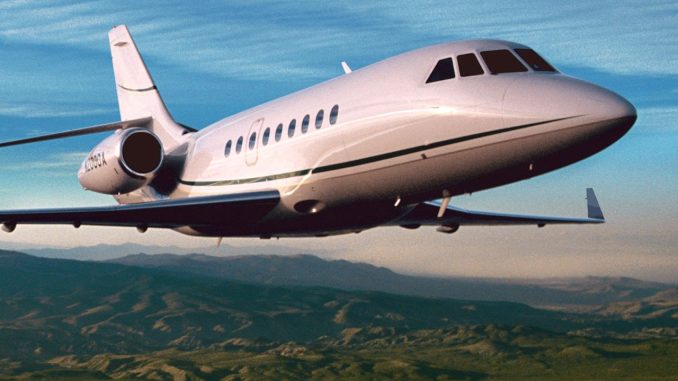
India’s business jet market is the fastest-growing private aviation market in the Asia-Pacific region, driven by rising corporate travel and a growing pool of high-net-worth individuals.
The India business jet market reached USD 692.3 Million in 2025 and is projected to reach USD 1,206.6 Million by 2034, growing at a CAGR of 6.18% during 2026-2034. Growth is driven by a rapidly expanding base of high-net-worth individuals, wider corporate adoption of charter services, and increasing interest in fractional ownership. Light jets lead the type segmentation with a 44.8% share, reflecting strong demand for cost-efficient short-haul missions. On-demand charter services account for 61.9% of the business model split, ahead of outright ownership at 38.1%. West and Central India leads regionally with a 39.8% share, anchored by Mumbai’s concentration of promoter-led enterprises.
The large jet segment grows fastest at an estimated 7.5% CAGR through 2034, supported by promoter families upgrading to long-range aircraft for international routes. Medium jets expand at approximately 6.3% CAGR, benefiting from their balance of range, cabin comfort, and operating cost for domestic and regional corporate missions across India’s metro corridors.
Light jets lead the type segmentation at 44.8% share, reflecting affordability and suitability for India’s short-haul metro-to-metro routes. On-demand charter services hold 61.9% of the business model split, as companies and individuals increasingly prefer pay-per-use flexibility over the fixed costs of ownership. West and Central India leads regionally at 39.8%, driven by Mumbai’s dense concentration of promoter-led enterprises and family offices.
Looking ahead, the market outlook remains constructive as airport infrastructure expands, fractional ownership platforms mature, and India’s UHNI population continues to grow at a pace among the fastest globally, sustaining demand across both charter and ownership segments through 2034.
Growing business activity in cities such as Ahmedabad, Pune, and Indore is creating opportunities for operators to establish new charter bases beyond the traditional metro clusters.
App-based charter marketplaces are simplifying price discovery and booking, attracting a new generation of first-time private aviation users.
Rapid fleet expansion is outpacing the supply of trained pilots and cabin crew certified for business jet operations, pressuring operators’ cost structures.
Import clearance procedures and multi-agency approvals for aircraft registration continue to lengthen fleet induction timelines for operators and owners alike.
Modern business jets increasingly feature satellite connectivity, advanced avionics suites, and noise-reduction cabin engineering. These upgrades are becoming a differentiator for charter operators competing for repeat corporate clients who prioritize in-flight productivity.
Manufacturers are progressively certifying aircraft for higher sustainable aviation fuel blend ratios, while Indian operators explore early adoption to align with global environmental, social, and governance (ESG) expectations from corporate clients.
Cloud-based fleet scheduling, predictive maintenance analytics, and app-based booking are streamlining operations for charter companies, reducing aircraft downtime and improving utilization rates across fleets serving India’s metro and Tier-2 routes.
JetSetGo is India’s one of the largest NSOP operators of private jets and helicopters, offering charter, aircraft management, and membership-based access from its Delhi headquarters.
Fleet: Cessna Citation CJ2, Hawker Beechcraft 750, Falcon 2000 Easy, and others.
Expanding its membership programme and digital booking platform to widen access beyond its core UHNI client base.
Taj Air Limited is a Tata Group-backed charter operator that has provided exclusive business aviation services from its own Mumbai hangar since 2002.
Fleet: Dassault Falcon 2000, Dassault Falcon 2000LX, and others.
Leveraging the Tata Group’s hospitality heritage to position itself as a premium, service-led charter brand for corporate and leisure clients.
Club One Air is India’s first aircraft fractional ownership company, operating charter and fractional programmes from bases in Delhi, Mumbai, and Visakhapatnam since 2005.
Dassault Falcon 2000, Cessna Citation, and others.
Deepening its fractional ownership offering to capture mid-sized enterprise clients seeking predictable aircraft access.
India is poised to experience a rapid upswing in the business aviation sector due to its strategic geographic location, favourable demographics and robust economic growth. Located strategically between the Middle East and Europe on one side and the East Asian economies on the other, India’s geography offers a lucrative opportunity for growth of general and non-scheduled aviation due to the rising demand from the ever-growing volume of high net-worth individuals and business houses in the country.
There are 150 airports in the country capable of handling business aviation aircraft. However, there is significant variation in the level of infrastructure and facilities available at these airports. Aviation infrastructure capable of handling big commercial jets is not readily available in most of Tier II and Tier III cities in our country. 100% foreign direct investment (FDI) is permitted under the automatic route for MRO, flying training institutes and technical training institutions.
Vincent Fernandes






Leave a Reply