
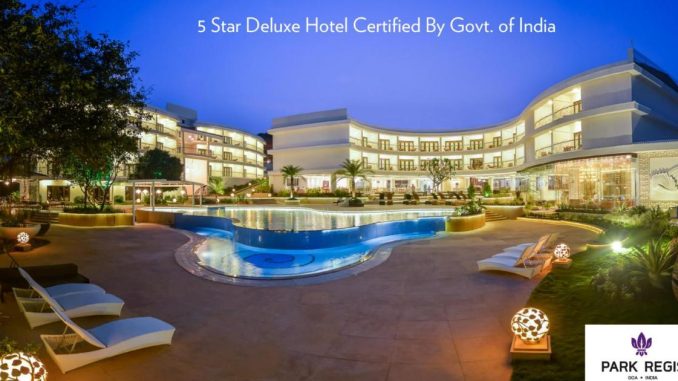
In 2026, churn in India’s luxury hotel sector shows up more in asset ownership, brand conversions, and shifting guest preferences than in broad occupancy collapse. While overall luxury demand and room rates remain firm, roughly one in four hotels across Hotelivate’s sample saw a RevPAR decline, highlighting uneven market performance.
The India luxury hotel market size increased from USD 3.0 Billion in 2025 to USD 3.3 Billion in 2026. The market is expected to reach USD 6.3 Billion by 2034, exhibiting a growth rate (CAGR) of 8.48% during 2026-2034. The market growth is attributed to rising disposable incomes, expansion of business travel, and the demand that is increasing demand for premium hospitality experiences among domestic and international tourists. As tourism infrastructure expands, the government initiatives promote India. These factors also strengthen market growth.
A luxury hotel distinguishes itself as a hospitality establishment that surpasses the provision of basic amenities, concentrating on delivering an extraordinary experience for its guests. They are recognized for their premium locations, frequently situated in affluent neighborhoods or renowned tourist destinations. The architectural design and interior decor exude an air of sophistication and refinement. Spacious rooms, furnished with high-quality furnishings and cutting-edge technology, are a characteristic feature of luxury hotels. Personalized service is a key signature, with a high staff-to-guest ratio ensuring prompt attention to every guest’s needs. Typically, these hotels boast on-site fine dining options, offering gourmet meals prepared by skilled chefs. Additional amenities often encompass state-of-the-art fitness centers, world-class spas, and occasionally, the provision of personal butlers. These establishments aim to provide a seamless, indulgent experience, often commanding a premium price point. By prioritizing meticulous attention to detail and delivering unparalleled service, luxury hotels distinguish themselves as the epitome of comfort and opulence.
Insolvency (IBC) transactions drove about US$288 million (58% of H1 2026 hotel investment volume), with luxury properties accounting for 51% of total transaction value as investors repositioned assets.
Brand signings heavily favor management contracts (77% in H1 2026) and brownfield conversions rather than slow green field builds, shifting independent and underperforming properties into established chains.
Metros enjoy tight supply barriers, whereas rapid inventory expansion in Tier II and III cities (74% of H1 2026 signings) creates localized rate and RevPAR pressure.
Luxury travelers are increasingly moving from large, standardized hotels toward smaller boutique stays, branded villas, and quieter leisure pockets (such as lake and hill areas near Udaipur and Jaipur).
Villas, homestays, and alternative accommodations are capturing group getaways and experience-led travelers, competing with traditional luxury rooms.
Operators face repeat-booking leakage when service issues go unaddressed without formal complaints, making proactive guest recovery key to retaining high-value stays.
India’s hospitality investment market is gaining momentum. Hotel transaction volumes surged 197% to US 497 million in H1 2026 with full-year investments projected to reach US 1.1 billion, according to JLL’s Hotel Investment Trends in India – H1 2026 report.
The surge reflects growing investor confidence, expanding institutional participation and rising interest in emerging hospitality markets.
Real estate developers accounted for 58% of transaction volumes in H1 2026, marking a significant shift from 2025, when high-net-worth individuals, family offices and private hotel owners held a combined 54% share. Listed hotel companies contributed 31.1%, while HNIs, family offices and private hotel owners accounted for 8.2%.
Tier II and III cities captured 60% of transaction volumes, surpassing Tier I markets at 40%. Investments spanned luxury resorts in Kerala and Coorg, luxury hotels in Agra, Mussoorie and Noida, and upper-upscale properties in Udaipur and Jaipur. The trend signals a broader geographical shift as investors look beyond established metropolitan markets to destinations benefiting from rising leisure demand.
Operational hotels accounted for around 70% of transaction volumes, while under-construction and non-operational properties contributed 23%, with land leases making up the balance. Luxury hotels led by segment, accounting for 51% of transaction volumes, followed by upscale properties at 35%, upper-upscale at 12% and economy hotels at 2%.
Branded hotel signings reached 29,360 keys by June 2026, with 74% concentrated in Tier II and III cities. Management contracts accounted for 77% of signings, followed by franchises at 22% and lease or revenue-share agreements at 1%.
Greenfield developments contributed 13,689 keys, while larger hotels also gained traction. Fifteen hotels with more than 250 keys were signed during H1, compared with five in the same period last year. Mumbai, Bengaluru, Hyderabad and Ahmedabad continued to attract development, while Rishikesh, Patna, Navi Mumbai and Jaipur emerged as important growth centres.
Branded hotel openings totalled 5,048 keys in H1 2026, with 71% in Tier II and III cities. Upscale hotels accounted for the largest share at 45%, followed by midscale at 28%, economy at 14%, upper-upscale at 8% and luxury at 5%.
Transactions driven by the Insolvency and Bankruptcy Code (IBC) generated approximately US$288 million, equivalent to 58% of H1 investment volumes. The activity underscores investor interest in distressed assets and opportunities to unlock value through acquisitions and repositioning.
JLL projects full-year hotel transaction volumes to reach US$1.1 billion, supported by growing institutional participation, consolidation and demand for quality branded assets. Platform-level investments are also expected to gain traction as investors seek scale, operational efficiencies and diversified portfolios.
Rating agency ICRA projects revenues of the Indian hospitality industry to grow by 7-9% YoY in 2026-27, following an estimated 11% expansion in 2025-26 (based on 15 large premium hotel companies, which account for majority of the sector’s revenues).
ICRA anticipates pan-India premium hotel occupancy to remain at 72-74% in 2026-27, similar to 2025-26 levels, while average room rates (ARRs) for premium hotels are projected to increase to Rs. 8,600-8,800 in 2026-27 from Rs. 8,200-8,500 in 2025-26.
India is increasingly emerging as an attractive destination for business, sporting and government events, which are expected to support inbound tourist arrivals. The entry of several global hotel brands into India should further support FTA inflows by improving international brand recall. In addition, these brands are likely to help hoteliers command premium ARRs in the upscale and luxury segments, which are generally preferred by international travellers, thus supporting earnings growth.
Vincent Fernandes






Leave a Reply